The Early Stoa · c. 279–206 BC
Chrysippus
The runner who wrote the system down — 705 books, none survive
“If I had followed the multitude, I should not have studied philosophy.”
His life
Chrysippus of Soli trained as a long-distance runner before he trained as a philosopher, and there is something of the distance runner in what he did next: he wrote over seven hundred books. He came to Athens, studied under Cleanthes, and when he took over the school around 230 BC he set about turning Zeno's vision into a fortress — defining every term, anticipating every objection, answering critics so thoroughly that antiquity said: if Chrysippus had not existed, there would be no Stoa.
His special genius was logic. Chrysippus worked out a logic of propositions — if this, then that — so far ahead of its time that modern logicians rediscovered his results two thousand years later. This was not an academic hobby. For the Stoics, every emotion rides on a judgment, and bad reasoning is how fear, rage, and despair get in. Logic was armor.
That is his deepest legacy: the claim that our passions are not forces that happen to us but opinions we have assented to — and can examine, and can revise. Every modern therapy that teaches people to question the thought behind the feeling is, knowingly or not, working in Chrysippus' shadow. He is said to have died laughing at his own joke, which for a man who spent his life arguing about the good death seems about right.
What he taught
Emotions are judgments
Anger, fear, and grief are not weather systems that strike from outside; they are opinions — usually hasty ones — that we have agreed to. Examine the opinion and the passion loses its grip.
Logic as armor
Chrysippus made rigorous thinking a spiritual practice. If suffering enters through bad inference, then learning to reason well is not pedantry — it is self-defense.
One connected cosmos
He argued that everything that happens is woven into a single web of causes. Nothing is random; the task is not to demand exceptions but to play your thread well.
In the Library
Chrysippus wrote more than seven hundred books. Not one survives whole — only quotations in later authors. Yet nearly every Stoic argument you will read in Seneca, Epictetus, or Marcus Aurelius runs on rails he laid.
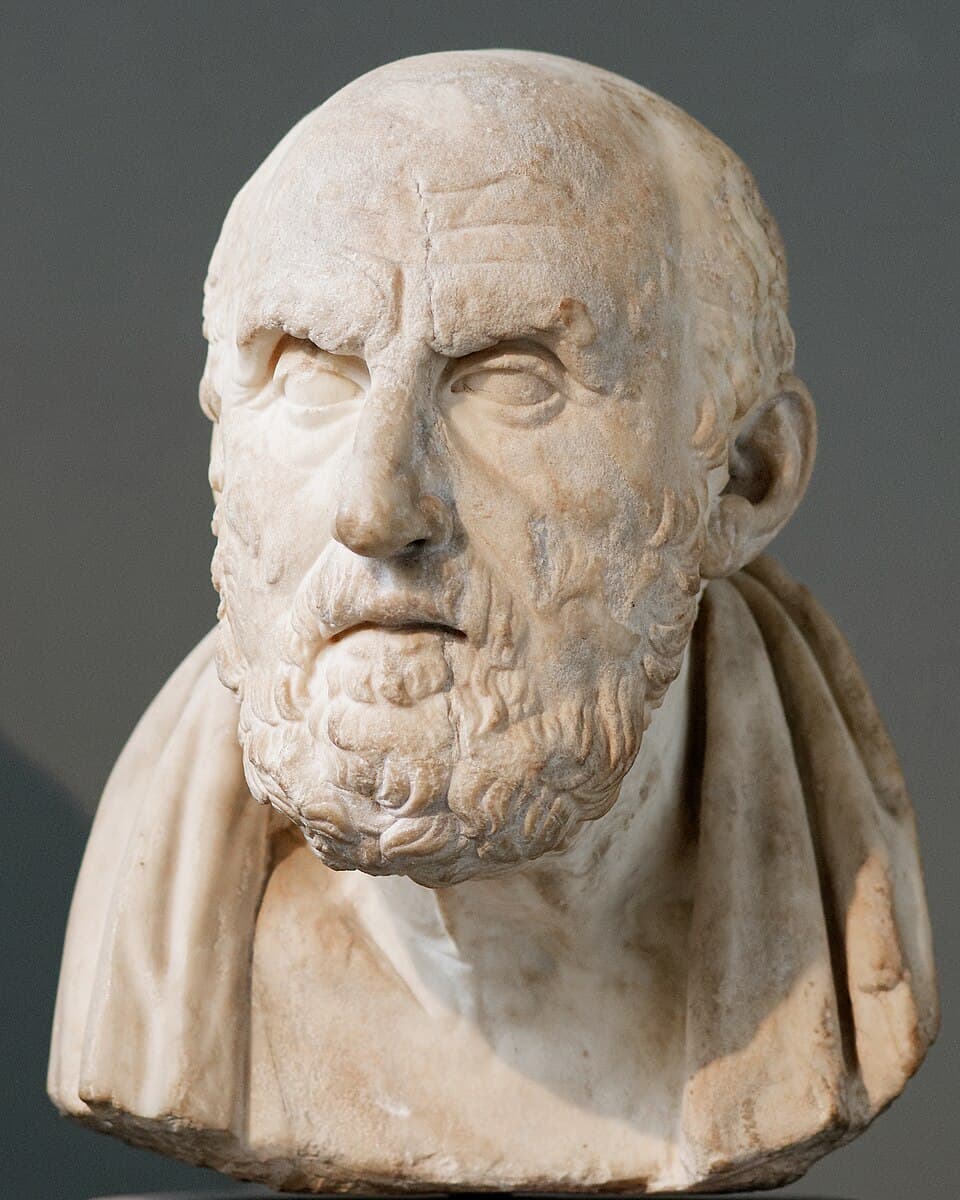
Portrait: Bust of Chrysippus, British Museum. Photo: Marie-Lan Nguyen, public domain, via Wikimedia Commons