The Roman Stoa · c. AD 50–135
Epictetus
Born a slave, he taught Rome what freedom is
“Men are disturbed not by things, but by the views which they take of things.”
His life
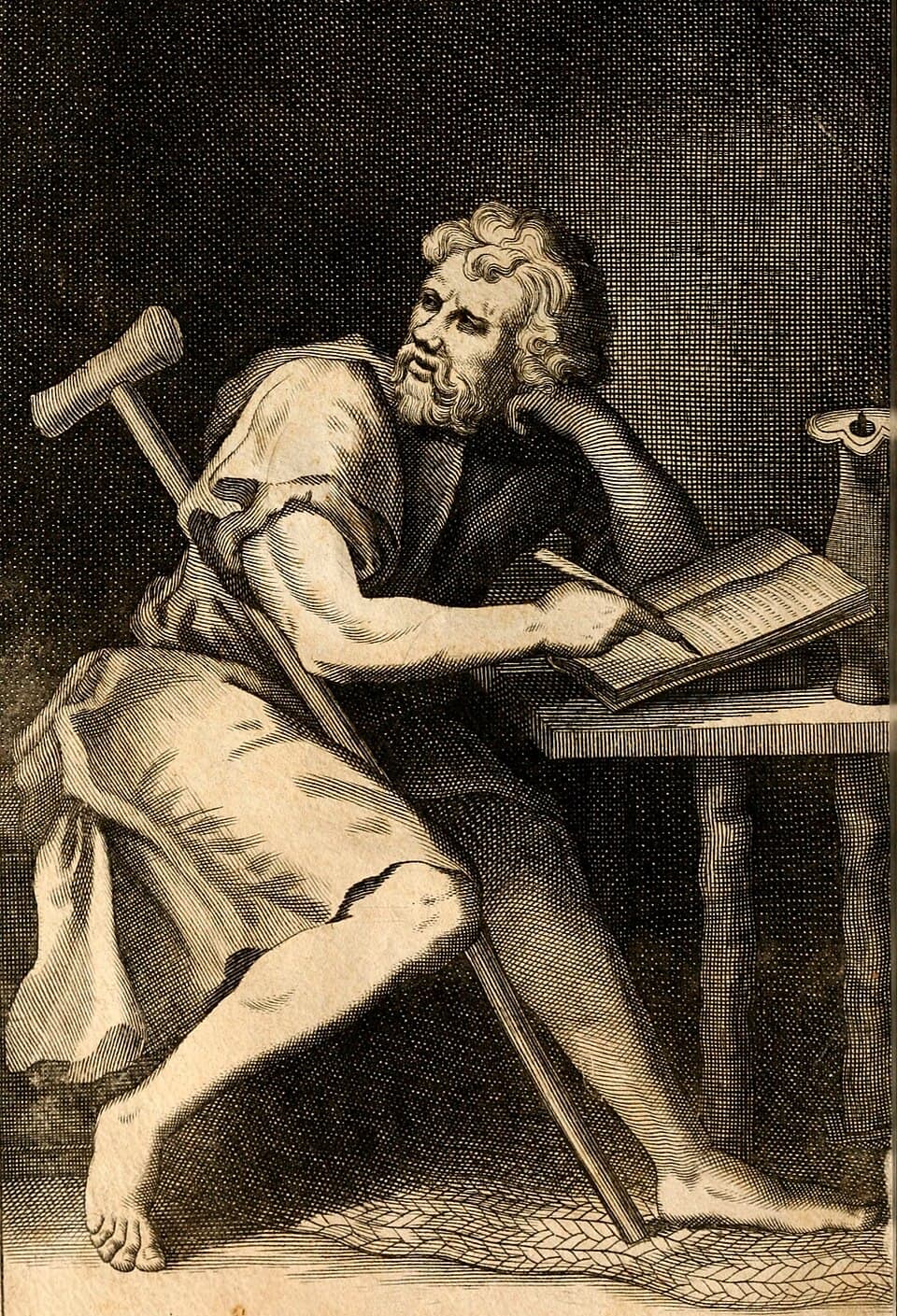
Epictetus was born a slave in Hierapolis, in what is now Turkey; even his name is not a name — epiktetos means 'acquired.' He was owned by Epaphroditus, a powerful freedman at Nero's court, and he was lame. One ancient story says his master twisted his leg until it broke while Epictetus calmly predicted the result; a drier source blames rheumatism. Either way he walked through life on a crutch, and treated the leg as his standing example of what is not up to us.
While still enslaved he was permitted to study with Musonius Rufus, and after gaining his freedom he taught in Rome — until the emperor Domitian banished the philosophers. Epictetus moved to Nicopolis, on the western coast of Greece, and built the most famous school in the Roman world. He owned a mat, a lamp, and little else; when someone stole the iron lamp, he replaced it with a clay one. Late in life, unmarried and ascetic, he took in an infant who would otherwise have been abandoned, and raised the child with a woman's help.
He wrote nothing. His student Arrian transcribed the classroom sessions that became the Discourses and distilled them into the Enchiridion — the 'handbook.' Its first sentence is the most consequential sorting rule in ancient philosophy: some things are within our power, and some are not. Half a century after his death, the most powerful man alive — Marcus Aurelius — was studying a copy of the Discourses and taking notes.
What he taught
The dichotomy of control
Your judgments, aims, and efforts are yours; your body, reputation, and fortune are not. Every Stoic exercise since is a footnote to sorting the first pile from the second.
You are your judgments
Men are disturbed not by things but by their views of things. The event is raw material; the verdict — catastrophe or assignment — is always yours.
Freedom is internal
A man who had been property redefined liberty: the person who craves what others control is a slave with extra steps. Want only what is yours, and no one can compel you.