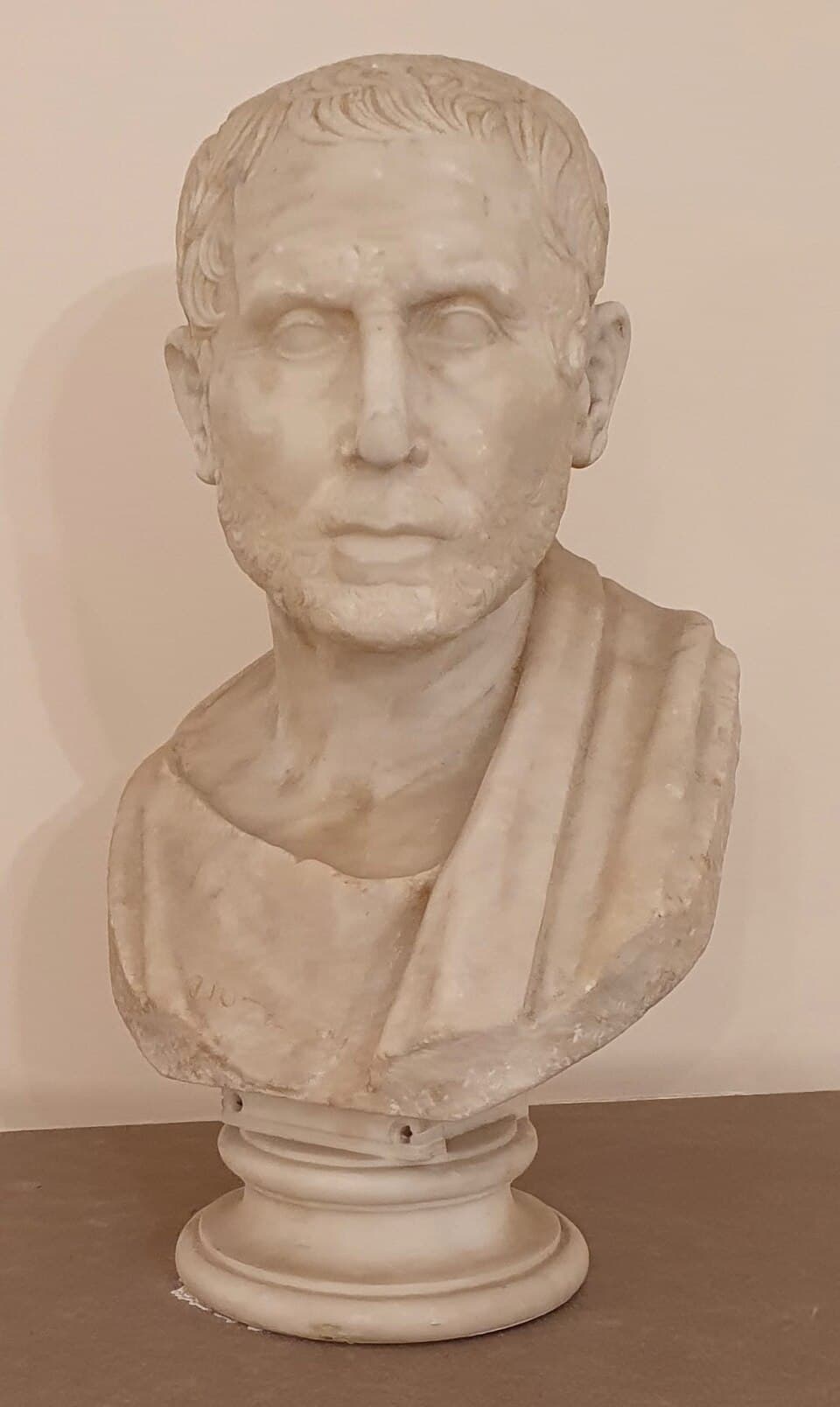
The Middle Stoa · c. 135–51 BC
Posidonius
The scientist of the school — he mapped the tides and measured the earth
“Do your worst, Pain — nothing you do will make me admit that you are an evil.”
His life
Posidonius, born in Apamea in Syria and a student of Panaetius, settled on Rhodes and made it the intellectual capital of the Mediterranean. He was a Stoic the way a river is wet — thoroughly, and in motion. He wrote a fifty-two-book history of his own times. He traveled to Spain to study the Atlantic tides and connected them to the moon. He estimated the circumference of the earth and the distance to the sun. Romans crossed the sea just to hear him lecture; Cicero studied with him, and Pompey — the most powerful man of the age — visited him twice.
For Posidonius none of this was a sideline from philosophy. If the Stoics were right that the cosmos is one rational, interconnected whole, then studying its parts — weather, peoples, planets, history — was studying the divine order itself. He came closer than anyone in antiquity to the modern idea that all knowledge is one fabric.
The most famous story about him is from his sickroom. When Pompey came to pay his respects, Posidonius was crippled by gout — and delivered, from his bed, a lecture arguing that pain is not an evil, pausing during the spasms to address the pain directly: nothing you do will make me admit you are bad. It is the Middle Stoa in one scene: enormous learning, and a doctrine tested where it hurts.
What he taught
All knowledge is one
Tides, history, astronomy, ethics — for Posidonius these were chapters of a single subject, the rational order of the world. Curiosity was a form of piety.
Pain is not an evil
Not a claim that pain doesn't hurt, but that hurting is not the same as being harmed. What pain cannot touch — judgment, character — is where your good actually lives.
Understand causes
His histories traced events to their causes in human character and circumstance. The Stoic discipline of seeing things as they are, applied to nations as much as to individuals.
In the Library
Everything Posidonius wrote — histories, geographies, treatises on the soul, the tides, the sun — is lost except as fragments quoted by later authors. His reputation survived: antiquity called him the most learned man of his age.