The Transcendentalists · 1817–1862
Henry David Thoreau
The surveyor who built a cabin to find out what life is
“I went to the woods because I wished to live deliberately, to front only the essential facts of life, and see if I could not learn what it had to teach, and not, when I came to die, discover that I had not lived.”
His life
Thoreau was Concord born and Concord loyal — a Harvard graduate who came home to work in his family's pencil shop, keep school, survey woodlots, and walk four hours a day. He was Emerson's handyman, gardener, and friend, and took the older man's doctrine of self-trust more literally than anyone: if life is to be examined, examine it with your hands.
In 1845 he borrowed an axe and built a cabin on Emerson's land at Walden Pond, a mile from town, to 'front only the essential facts of life.' He stayed two years, growing beans, keeping accounts to the half-cent, reading, and writing. One night in town he was jailed for refusing the poll tax of a government that enforced slavery; the night became the essay now called Civil Disobedience, which later reached Gandhi and Martin Luther King Jr.
Walden, the book he distilled from the experiment, took nine years and seven drafts. He died of tuberculosis at forty-four, mostly unknown, his masterpiece a commercial failure. Asked near the end whether he had made his peace with God, he answered that he was not aware they had ever quarreled.
What he taught
Deliberate living
The Walden experiment in one word: strip life to what is essential, learn what it teaches, and refuse to reach the end having never lived. Simplicity is the method, not the point.
Wildness
"In Wildness is the preservation of the World." Wild nature — and the wild, unsubdued part of a person — is not a luxury but the spring that keeps a life, and a civilization, from going stale.
Conscience over law
When law and conscience conflict, Thoreau taught, follow conscience and accept the cost — one honest act, one night in jail, weighs more than years of opinion.
In the Library
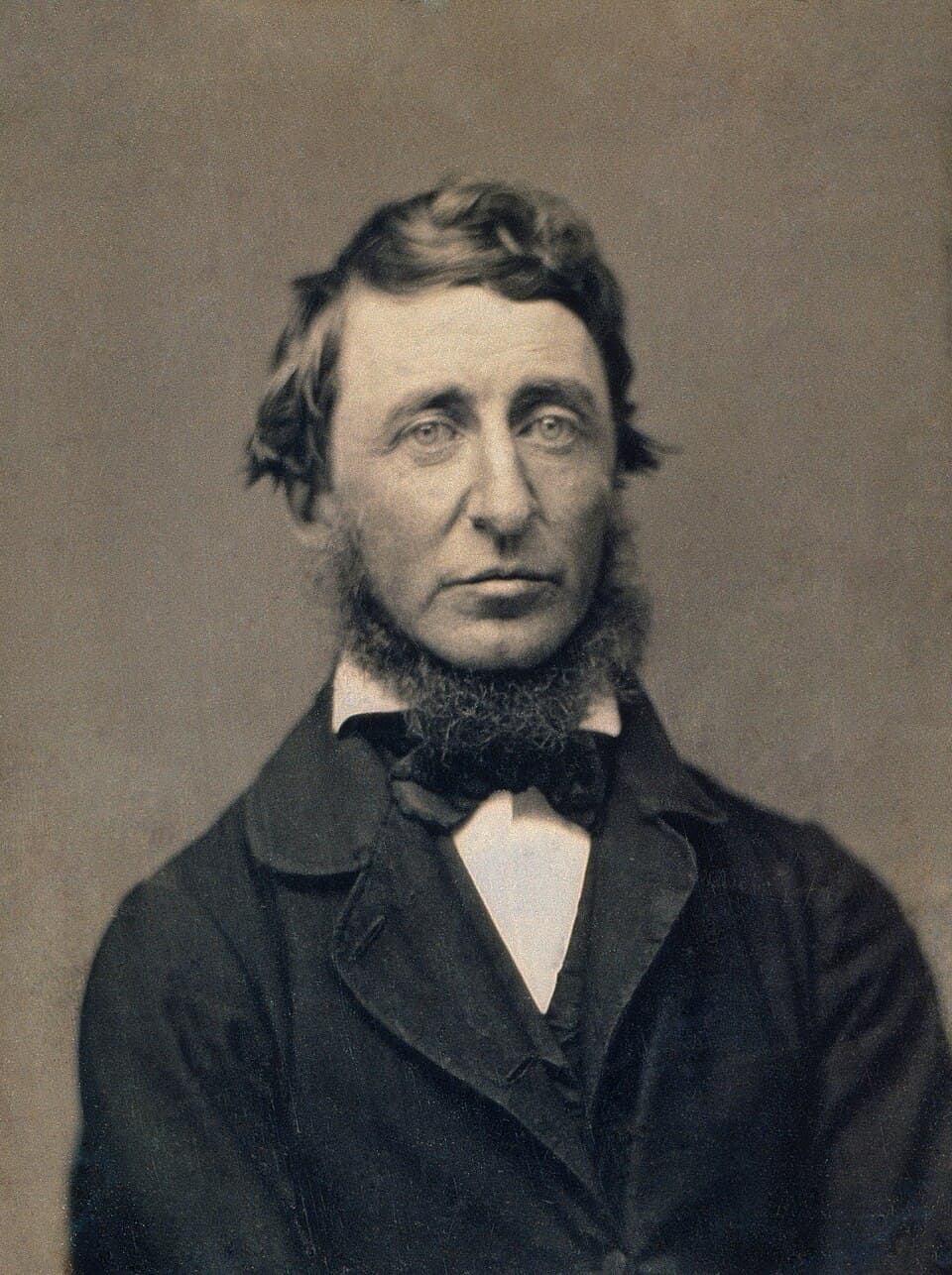
Portrait: Daguerreotype by Benjamin D. Maxham, 1856. Public domain, via Wikimedia Commons